
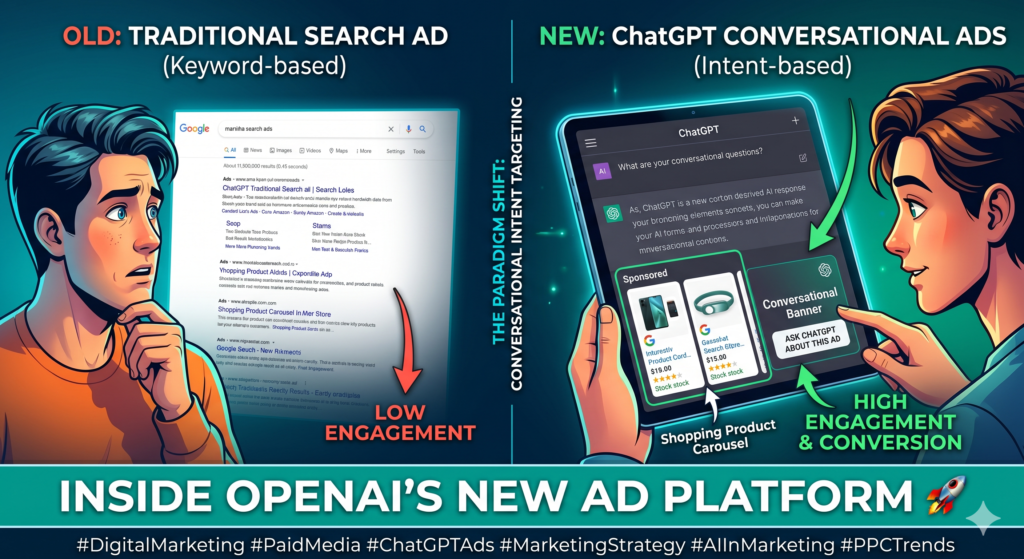
The digital marketing landscape just shifted beneath our feet, and if you are still relying on yesterday’s playbooks, you are falling behind. As of February 9, 2026, OpenAI officially launched native advertising inside ChatGPT, marking a massive paradigm shift toward conversational intent targeting. Developing a robust ChatGPT advertising strategy is no longer optional; it is the prerequisite for relevance in 2026.
Why You Need a New ChatGPT Advertising Strategy
For years, digital marketers have lived in a world defined by the blue link. We bid on keywords, optimized for search engine results pages, and chased clicks on static ads. However, this traditional approach is facing extinction because user behavior has moved beyond the simple keyword.
Today, a user isn’t just typing “buy running shoes” into a search box; they are asking an AI, “I’m training for my first 5K and have high arches; what shoes do you recommend?”. This shift from static search to conversational flow means that your old SEM tactics—which do not account for ChatGPT advertising strategy—will struggle to capture this high-intent audience.
How Conversational Intent Targeting Works
The core of this new frontier is moving past static keywords and optimizing for semantic context. As shown in image_85b4c3.png, optimizing your content—including your subheadings and introduction—with your focus keyword is essential for ranking.
The Architecture of the New Ad Platform
Unlike traditional ads that feel like interruptions, these new formats appear directly below ChatGPT’s organic responses. They are clearly labeled as “sponsored” and are visually isolated to maintain user trust.
Key Formats for Your ChatGPT advertising Strategy
To succeed, your ChatGPT advertising strategy must embrace the specific formats OpenAI has introduced:
- The Shopping Product Carousel: This format is perfect for e-commerce brands. It displays rich product cards with logos, pricing, stock status, and estimated delivery times. Users can buy directly through the chat or visit your site.
- The Conversational Banner: This feature includes an “Ask ChatGPT About This Ad” button. It disrupts the industry by allowing users to enter a guided, interactive conversation with your brand’s persona instead of just clicking a static link.
Moving Beyond Static Keywords: A Strategic Shift
If you are a marketer or business owner, you must realize that early adoption is where the highest ROI hides. Those who master conversational ad creatives now will hold a massive competitive advantage as this platform rolls out globally.
Building Your Conversational Presence with ChatGPT advertising strategy
To implement a winning ChatGPT advertising strategy, consider these pillars:
- Semantic Context: Stop focusing solely on keywords. You must start optimizing your content and ad copy for conversational flows that answer user needs.
- Targeting the Broad User Base: Remember that the platform currently focuses on monetizing the broader user base, excluding premium accounts like Enterprise and Education. Your strategy should account for this demographic reach.
- Trust and Integrity: Because the ads are visually isolated, your brand must focus on providing value within the conversational experience to justify the “sponsored” label.
The Future of Your Digital Strategy
The digital marketing landscape is not just changing; it is being rebuilt. Agencies and internal teams that recalibrate their 2026 strategies now will be the leaders of this new frontier.
Would you test a Conversational Banner for your brand, or do you prefer sticking to standard search ads for now? Mastering your ChatGPT advertising strategy requires a shift in mindset—from pushing a static message to engaging in a dynamic, high-intent conversation.
What are your thoughts on this shift? Let’s talk in the comments below!
Are you ready to pivot your brand strategy toward conversational AI, or do you have concerns about the transition away from traditional search?